Technological Processes – The System’s Engine
In this 5‑minute module, you will learn how workflows, automations, and integrations shape behaviour across the organisation.
Why is this important?

Every workflow, automation, and integration influences how fast work moves, where it gets stuck, and how people respond. When a process slows down, the entire organisation feels it.
The main concept
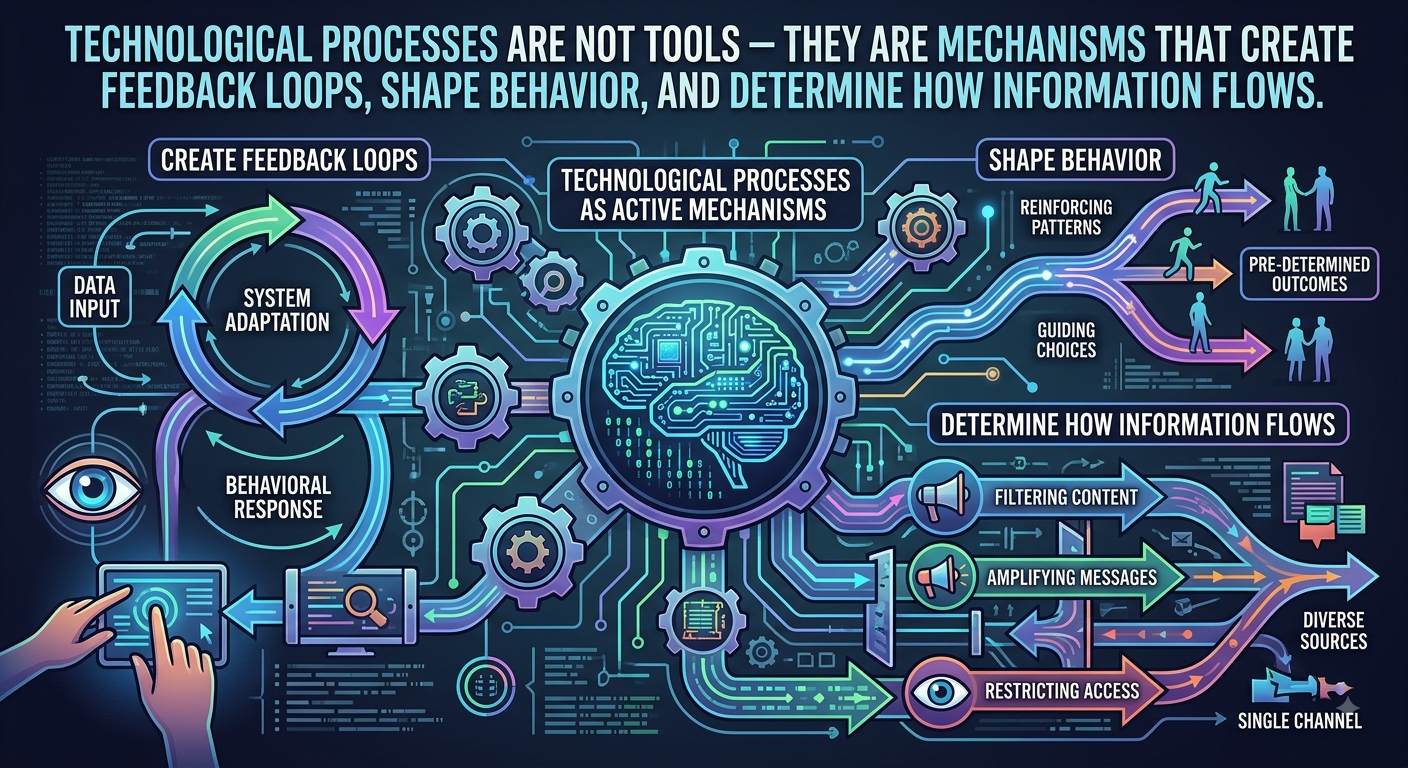
Technological processes are not tools — they are mechanisms that create feedback loops, shape behaviour, and determine how information flows.
Slow triage creates backlogs. Poor integrations create delays. Missing automation creates manual work that compounds over time.
To improve any workflow, you must understand the people, decisions, and downstream processes it touches.
A Real‑World Example: CapeTech Support Services

CapeTech manages 14,000 customer devices across the Western Cape. Every support request enters a triage workflow.
When the triage automation failed for 3 days, tickets were sorted manually.This created a feedback loop:
Manual sorting → slower responses → backlog → more escalations → even slower sorting
The Technical Operations Administrator restored the automation, updated the workflow rules, and documented the failure so it could not repeat.
One small process failure affected the entire support ecosystem.
Quick check
What is a feedback loop?
A. A one‑time error
B. A repeating pattern where a process influences itself
C. A customer complaint
D. A hardware failure
Correct answer: B
A workflow slows down after a new integration is added. What should you check first?
A. The CEO’s calendar
B. The integration’s data mapping and triggers
C. The office Wi‑Fi password
D. The company’s annual report
Correct answer: B